
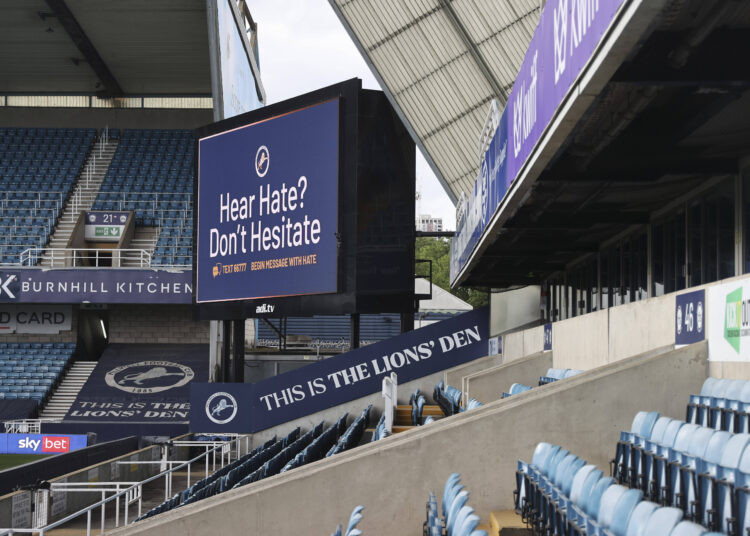
Millwall vs Swansea City at the Den on Tuesday night will feature two promotion hopefuls eager to build on their narrow wins in the EFL Championship Matchday 9 over the weekend.
Swansea City came from behind to beat Norwich City 2-1 over the weekend, extending a run in which they have become habitual comeback men. Millwall, meanwhile, beat Preston North End 1-0 after Camiel Neghli finished from Luke Cundle’s assist in the 79th minute. The contrast sets up the central question here. Can Millwall turn their renewed momentum into another controlled home performance vs Swansea, or will the table-toppers’ possession and resilience carry them through another awkward test?
The result matters to Millwall without deciding their season. The Lions are trying to build on a victory that ended a four-match wait for a win, and another positive result would strengthen the sense that their campaign is moving in the right direction. A draw would keep that progress intact, but a defeat would make the Preston result look more like a brief interruption than a change in direction.
Their recent run has been uneven but encouraging, and the side brings a settled tactical base into this match. On the other hand, Swansea arrive for the game vs Millwall as the league leaders, seeking to keep their early advantage moving while facing another demanding fixture before hosting West Ham United.
The stakes are meaningful rather than decisive. A point would still preserve their progress, while a defeat would be a setback rather than a crisis. Their comeback against Norwich and earlier fightbacks against Stoke City and Lincoln City show a side carrying confidence in difficult matches, but they must manage risk away from home.
Adam Idah’s fitness is the main variable; he is expected to start despite limping out against Norwich, and any limitation would reduce Swansea’s ability to sustain their attacking shape through the centre.
For the home side, Tristan Crama is unavailable because of an ankle injury. Millwall should retain their established 4-2-3-1 vs Swansea City, with Max Crocombe in goal behind Zak Sturge, Jake Cooper, Caleb Taylor and Ryan Leonard. Cooper and Taylor provide a settled centre-back pairing, with Taylor bringing the stronger attacking return; he has scored twice and supplied one assist in nine appearances.
As for the midfield unit, Jenson Metcalfe and Derek Mazou-Sacko should form the double pivot, with Metcalfe’s two assists and 14 key passes in nine appearances reflecting his importance in progressing the ball before Millwall go forward more directly. The attacking group should be built around Lyndon Dykes behind Tairyk Arconte, with Camiel Neghli on the left and Mark Sykes on the right.
Dykes has four goals from 14 shots on target and also takes penalties, giving Millwall a central link between their midfield screen and lone striker. Neghli is the more influential creator in the line; he has three goals, two assists and fifteen key passes, and his movement is likely to decide how often Millwall can connect their direct service to the final third. Arconte has started eight times and offers the regular reference point at the top of the shape.
Probable Millwall Lineup (4-2-3-1): Crocombe; Leonard, Taylor, Cooper, Sturge; Mazou-Sacko, Metcalfe; Sykes, Dykes, Neghli; Arconte
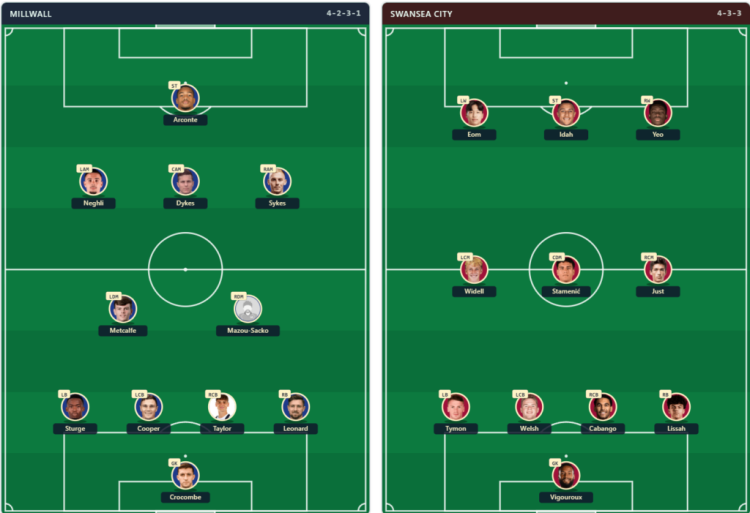
Probable Swansea City Lineup (4-3-3): Vigouroux; Lissah, Cabango, Welsh, Tymon; Just, Stamenic, Widell; Yeo, Idah, Eom
Swansea City are expected to use a 4-3-3 setup vs Millwall, with Lawrence Vigouroux take his place in goal. The backline will feature Josh Tymon, Stephen Welsh, Ben Cabango, and Filip Lissah. Josh Key is out with a hamstring injury for the away side, leaving Lissah to continue at right-back; he has started eight matches and should be asked to balance defensive security with the width the formation requires.
Marko Stamenic should sit at the base of the midfield, with Melker Widell and Elijah Just either side of him. Stamenic supplies the protection in front of Welsh and Cabango, while Just will bring the forward thrust after producing eight key passes so far. Eom Ji-sung should provide the left-wing width, with Moussa Yeo on the right and Adam Idah through the middle.
Yeo has scored three times and put eight of his thirteen shots on target, making him Swansea’s most threatening wide runner. Idah is the doubt within the predicted eleven; he is expected to start, but his recent knock could influence how long Swansea can maintain their preferred attacking balance.
Millwall’s 4-2-3-1 setup is designed to leave two midfielders behind the attacking line, protecting the centre while still allowing Camiel Neghli and Mark Sykes to support Arconte. The shape suits a side that would rather bypass midfield than spend long periods trying to play through it.
Millwall send 60 long balls per match compared with Swansea’s 61.5, with both well above the league’s typical figure of 56. So, this is unlikely to be a simple possession-versus-defence contest. Both teams use direct deliveries, but Millwall are more likely to make them the first step of the attack.
Swansea’s 4-3-3 system gives them an extra central midfielder and wider outlets around the front three. They hold 58% of the ball against Millwall’s 50%, with the league-typical figure at 51%, a gap that should give Swansea more control of the first phase. That difference does not automatically mean territorial dominance, however.
Millwall’s plan is to send the ball forward, contest the next action and use the two-man screen to prevent Swansea from turning possession into clean progress through the middle. Both sides are willing to pursue the win while accepting that a draw has value. The hosts should therefore avoid turning every attack into a full commitment, particularly with the right side of the defence altered.
Swansea can carry the ball and press for the opening, but their away approach should remain measured rather than reckless. Their possession identity asks them to establish the game through midfield; Millwall’s structure asks them to make that first phase uncomfortable and attack the space created by the second ball.
The main system pattern is the meeting between Swansea’s three-man midfield and Millwall’s direct route. Alex Neil’s men’s recent attacking process has produced 1.86 xG per match against Swansea’s 1.25, although the away side’s control of possession may still decide where the match is played.
If Millwall win enough first contacts, Lyndon Dykes and the attacking midfielders can keep the home side high enough to create repeat pressure. If Swansea regain the ball cleanly, their numerical advantage in the centre should allow them to move the home side’s double pivot and establish the platform they prefer. Meanwhile, the lead duel is Camiel Neghli against Filip Lissah.
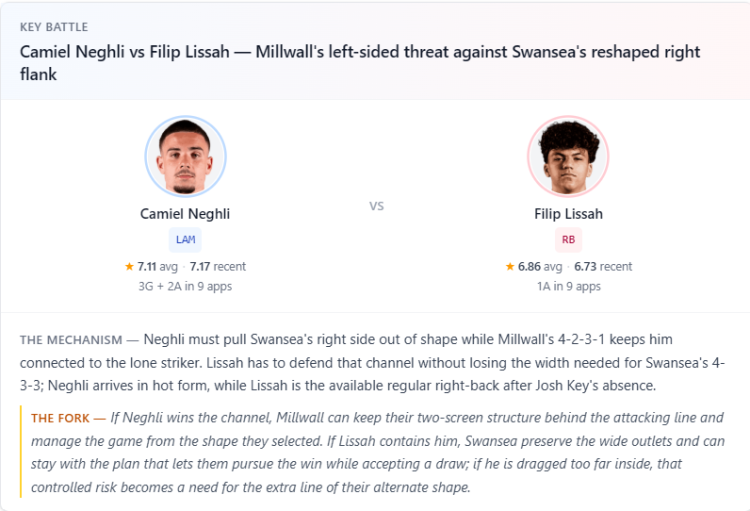
Neghli needs to pull Swansea’s right side away from its defensive line while staying close enough to Dykes for Millwall’s direct attacks to have a second phase. Lissah must contain that movement without abandoning the width needed to keep the visitors’ 4-3-3 stretched. The absence of Josh Key has made Lissah the regular right-back, and he will need to defend both the channel and the space outside it.
If Neghli wins that channel, Millwall can keep their double screen behind the attack and manage the match from their chosen structure. If Lissah contains him, Swansea can preserve their wide outlets and continue pursuing the win without making the game more open than intended.
The danger for Swansea is that Neghli’s movement drags Lissah inside, leaving the right side less secure and forcing the visitors to consider an extra midfield line. Behind this contest sits the central battle between Lyndon Dykes and Marko Stamenic. Dykes must secure the link and second ball, while Stamenic has to prevent those loose deliveries becoming sustained home pressure.
We predict a Millwall win. Their home advantage is supported by the stronger recent attacking process, the continuity of their chosen structure and a direct game plan that can disrupt Swansea before the visitors establish control.
Millwall’s recent five-match figures show 1.86 expected goals for and 1.25 against, while Swansea have produced 1.25 for and 1.24 against in the same period. That is not a decisive separation, but it gives the home side the more convincing attacking platform for this particular match-up. The Lions also bring a useful route from dead-ball situations.
Their set-piece threat can turn territorial pressure into a chance even when Swansea have controlled possession, and it gives the home side a way to score without needing to dominate the ball. The defensive record offers some support too. Millwall have kept two clean sheets in their recent run, while Swansea have kept one. That does not erase the visitors’ league-leading form, but it makes a narrow home result plausible.
The strongest case against Millwall is Swansea’s ability to control the first phase and deny the home side the second balls on which their plan depends. If Marko Stamenic protects the space in front of the centre-backs and Swansea’s midfield receives cleanly, Millwall may spend too much of the match defending without the territory required for their set pieces or direct attacks.
Moussa Yeo’s threat on the right could then test the altered home defensive side, while Adam Idah’s presence would give Swansea a target inside the penalty area. The away side are capable of turning control into chances, even if the match does not become open.
The likely scoreline range is 1-0, 2-1 or 1-1. The first two outcomes fit Millwall’s direct pressure and home advantage, while the draw remains a substantial possibility because both managers can accept it and Swansea have enough control to suppress the game.
Swansea have the clearest in-game adjustment if Millwall’s direct route begins to dominate. They can move from the 4-3-3 into a 4-2-3-1, adding another line between the midfield and the defence.
That change would give them more protection around the second ball and help prevent Camiel Neghli and Lyndon Dykes from repeatedly connecting attacks around Marko Stamenic. It would reduce some of the natural central rotation in their starting shape, but it is the practical response available if Millwall turn the match into a sequence of aerial contests and loose recoveries.
