
José C. Pérez can be found on social media here, and if you’re hungry for more, find their excellent work here.
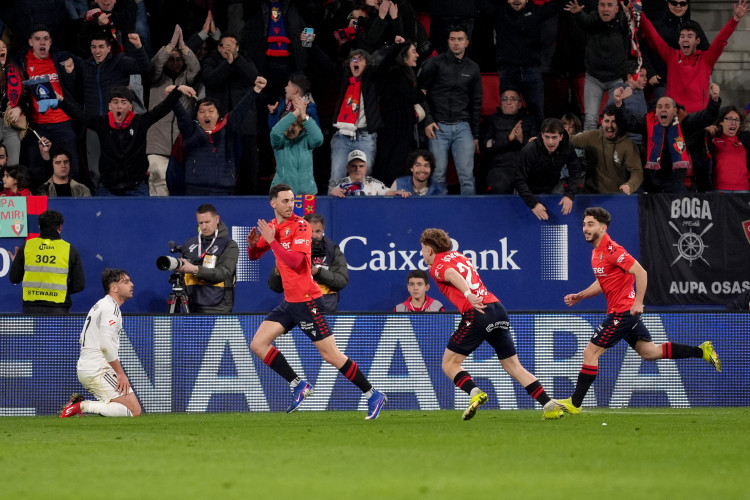
Osasuna experienced a rather shaky start to their season. Understandably, that made fans and the club worry they were in danger of losing their hard-won stability, a run of seven straight years in La Liga. However, 2026 has seen an uptick in Osasuna’s fortunes. Diario de Navarra recently pointed out that before their recent defeat to Valencia, Osasuna would have been occupying Champions League spots based solely on their form in the new calendar year – 15 points out of a possible 24.
This points average shows that something has finally clicked in the team. The initial skepticism surrounding the post-Arrasate era is fading way, and it seems that Alessio Lisci can finally say that his project has found its footing to move forward.
In 2024, Jagoba Arrasate ended his spell as Osasuna manager, the sun setting on a period of remarkable consistency and intensity. Vicente Moreno was brought in as a successor for the 2024-25 season, but he always felt more like the kind of manager who can stabilise an already ongoing project rather than build a new one. With his departure at the end of the season, the challenge for the 2025-26 season was massive: finding a manager to build a new, sustainable project. The club turned to Lisci, whose reputation was forged during his outstanding spell at Mirandes. Known for his ability to coax maximum performance from limited resources, Lisci seemed like a great fit for Osasuna’s pragmatism.
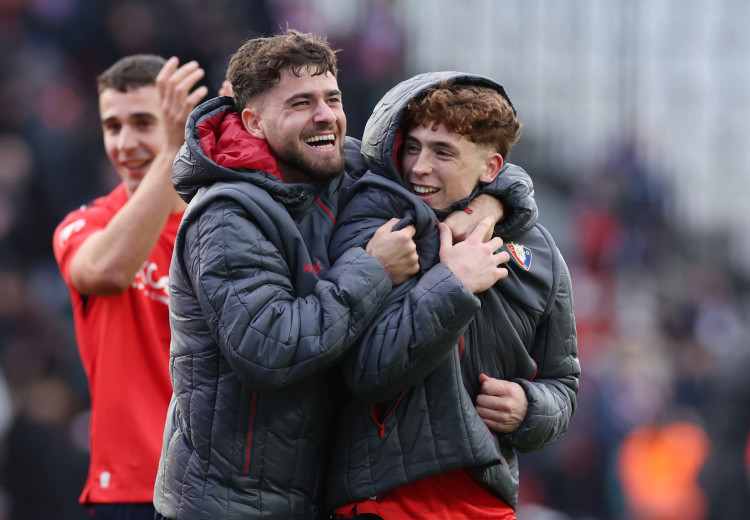
This required some careful squad-building, and the summer transfer window was a busy one for the Navarrans. They especially focused on boosting their flanks. Raul Moro and Victor Munoz would add youth and talent to the forward line, while Javi Galan and Valentin Rosier would bring energy and solidity to the fullback positions,. It wasn’t until January that Moro and Galan were brought in, with Sporting Director Braulio Vazquez taking the pressure off Lisci by admitting the Italian need more resources when results were inconsistent.
The initial stages of the season were, in all honesty, a bit of a grind. Lisci settled on a similar 5-3-2 system to the one he used at Mirandes. On paper, the three centre-backs and two forwards meant the team would be defensively solid and strong in both their box and the opponent’s. In practice, it proved to be a difficult fit. The system made difficult for Osasuna to press, forcing them into a more passive, defensive posture. This meant that star striker Ante Budimir was often left isolated and far away from the penalty box, making it challenging for him to get good sights on goal. The intense identity that had become Osasuna’s trademark under Arrasate was noticeably absent, and the team struggled to find its rhythm.
The turning point came on December 20, in a solid victory against Alaves. Lisci, demonstrating his tactical flexibility, switched to a 4-2-3-1, which had a very a clear impact. With an extra player in midfield, Osasuna could press more effectively, making it harder for the opposition to control the game. Crucially, this shift allowed Budimir to receive the ball further up the pitch, putting him in a much better position to create scoring chances
The fact that this extra midfielder was Ruben Garcia had additional benefits. His left-footed delivery helped create more opportunities from set pieces, giving Budimir more chances to have an impact on the game. The team was finally playing with the intensity and directness that had been so sorely missed.
While Budimir naturally remains the undisputed focal point of the attack, Osasuna’s resurgence has been fueled by several other key pillars. In midfield, we could see Jon Moncayola’s sober passing and work-rate, and Aimar Oroz’s ability to find pockets of space between the lines. On the flanks, Munoz’s dribbling and directness have added a verticality that the team lacked. Defensively, Alejandro Catena has been a titan organising the backline and posing a threat in set pieces, while Galan has settled in well in his new club.
Osasuna brings together sponsors for ‘Osasuna Desde la Cuna’ Initiative.
— C. A. OSASUNA (@osasuna_en) March 4, 2026
While the Champions League might be a bridge too far this season, a top-seven finish and a return to European competition is certainly within reach. During a La Liga season where half the table is locked in a fierce battle to survive, Osasuna are incresaingly comfortable and happy about it; a established mid-table team with an outside chance at European spots. This is the result of a long and thoughtful sporting project that develops homegrown talent and complements it with smart, targeted signings. The club’s leadership, from the sporting director to the President Luis Sabalza, has built a solid foundation that allows for periods of transition without sacrificing competitiveness.
