
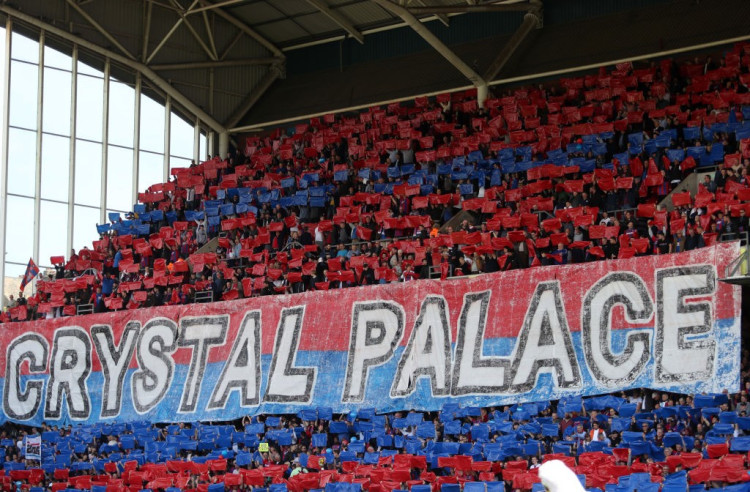
Crystal Palace vs Liverpool at Selhurst Park on Sunday will be a battle of two teams looking for a response after setbacks in the Premier League and Europe over the past week.
Liverpool’s consecutive defeats to Arsenal and Fenerbahce have changed the tone around this trip. They lost 1-0 at Anfield before Wednesday’s 3-2 Champions League reverse in Istanbul, and the response at Selhurst Park will test whether Andoni Iraola’s new side can recover its composure quickly. Crystal Palace, meanwhile, drew 1-1 with Hoffenheim on Thursday despite playing with ten men, giving Pierre Sage’s team a fresh example of resilience before a difficult league assignment.
The result matters to both clubs, but not in the same way. Palace are in an early relegation battle and need points to move away from danger; Liverpool need a response to halt a damaging sequence, though the season is still at a stage where a draw would not ruin their position. That makes this a meaningful fixture rather than a win-or-bust contest, with Palace trying to make the match uncomfortable and Liverpool attempting to restore authority without losing their platform.
Palace are 18th and have gone without a win in their last five league matches, so another defeat would deepen the pressure around Sage’s side. Their latest league result was a draw, while the European performance showed that they can stay competitive when the match turns against them. They carry that fighting quality into this fixture, but inconsistency remains the larger concern. The suspension of their usual central striker also means the home side must find a different way to make its attacking structure function.
Liverpool’s latest result was a defeat, interrupting a previously strong league sequence and leaving the visitors seeking an immediate correction before the international break. They have more attacking production behind them than Palace, but successive losses have exposed the cost of defensive mistakes, particularly from dead-ball situations. The absence of a natural high-width option on the right should also influence how aggressively their full-back structure advances.
Crystal Palace’s missing players are Chadi Riad, who is out with a knee injury, and Jean-Philippe Mateta, who is suspended following a red card. Mateta’s absence is the more important change to the starting plan: Eddie Nketiah should lead the line instead, and Palace will need their two attacking midfielders to connect more often with the striker rather than relying on the usual focal point.
The expected Palace shape is a 3-4-2-1, the structure they have used most regularly in this run. Walter Benítez should keep goal behind a back three of Jaydee Canvot, Axel Disasi and Chris Richards. Canvot and Richards have both started regularly, while Disasi’s five appearances, including four starts, make him the expected choice for the remaining central position. He has also supplied one key pass despite playing only 329 minutes, a small but useful sign of his involvement when Palace build from the back.
Tyrick Mitchell should hold the left wing-back position after starting all nine of his appearances and producing two goals from seven shots on target. Anan Khalaili is expected on the right, with Quinten Timber and Adam Wharton forming the central midfield. Wharton has started all nine matches and leads the squad for key passes jointly with Pino, while Timber has one assist and three key passes from five starts. Both are important to the home side’s ability to progress the ball, although Timber’s recent form has been less convincing.
Yéremy Pino and Daichi Kamada should operate behind Nketiah. Pino has eight starts, eleven key passes and two big chances created, making him the clearest creative route in the Palace side. Kamada has only three starts but remains a trusted attacking presence, while Nketiah has put six of his nine shots on target and should provide a more direct box threat in the suspended striker’s place. Ryan Gravenberch is doubtful for Liverpool because of a heel problem, but the expected away midfield remains Alexis Mac Allister and Dominik Szoboszlai behind Florian Wirtz. Alisson starts behind Ronald Araujo, Jérémy Jacquet, Virgil van Dijk and Milos Kerkez, with Bradley Barcola, Cody Gakpo, Wirtz and Alexander Isak completing the attacking group.
Liverpool’s unavailable players are Jeremie Frimpong, Hugo Ekitiké and Conor Bradley. Frimpong’s absence matters most to the shape because Araujo offers a more defensive solution at right-back, while Kerkez remains the expected left-back. Van Dijk and Jacquet provide the established central pairing. Barcola’s seven appearances include six starts and three assists, Wirtz has 22 key passes, and Szoboszlai has nine key passes with a 7.08 rating, so Liverpool still have several routes into the final third. Isak carries the clearest finishing burden after scoring six times and putting nine of 22 shots on target.
Palace’s 3-4-2-1 is designed to keep three centre-backs behind the wing-backs while Pino and Kamada work in the spaces behind Nketiah. It allows the home side to pursue a win without abandoning defensive cover, but the shape only works if the wing-backs can advance without leaving Wharton and Timber overwhelmed in front of the back three.
Liverpool’s 4-2-3-1 offers a cleaner central platform. Mac Allister and Szoboszlai sit behind Wirtz, giving the central creator a stable connection to Isak and the wide attackers. Liverpool are willing to seek the win, but they can also protect a draw rather than turning the game into an uncontrolled exchange. Palace have the same basic calculation at home, so neither side needs to force every attack.
The measured possession gap is significant: Liverpool average 56% of the ball against a league typical 49.5%, while Palace average 45% against that same benchmark. Liverpool’s attacking process also carries more volume, with 13 shots per match compared with Palace’s 10.5, although both figures sit against a league typical 13. The likely pattern is therefore Liverpool having more territory and Palace trying to make their moments count through wing-back advances, second balls and the two players behind Nketiah.
That creates the match’s wider tactical problem. If Palace push Mitchell and Khalaili forward together, they can stretch Liverpool’s back four and make the home side’s three-man base useful in the attacking phase. If they hold too deep, Liverpool can keep Wirtz near the central pockets and make Palace’s two-man midfield defend for long periods. Liverpool’s own recent vulnerability at set pieces means they cannot simply concede dead-ball pressure: their defeat at Fenerbahce included three goals from such situations, while Palace’s European draw included a late set-piece route back into the match.
The first major duel is Anan Khalaili against Milos Kerkez. Khalaili must advance high enough to force Kerkez to defend rather than support Liverpool’s attacks, while Kerkez must protect his side without allowing Palace to create a sustained overload on that flank. Khalaili’s steadier profile gives Palace a route to maintaining their chosen shape, whereas Kerkez arrives in strong form and has the defensive responsibility to keep Liverpool’s platform intact.
If Khalaili wins that height battle, Liverpool may have to defend wider and Palace can preserve the back-three screen while still looking for the win. If Kerkez controls the channel, Palace could be pushed toward their more aggressive alternative, which would remove some of the cover that makes the 3-4-2-1 practical. Behind the duel sits the whole structure: Khalaili cannot attack freely if Palace’s central protection disappears, and Kerkez cannot advance safely if Palace keep him pinned.
The central contest between Adam Wharton and Florian Wirtz adds a different question. Wharton has 11 key passes and three big chances created, but his recent form has dipped; Wirtz has supplied 22 key passes and remains the link Liverpool’s shape is built around. Wharton has to screen the space in front of Palace’s back three, while Wirtz will look to receive between the midfield pair and the centre-backs. If Wharton keeps him away from those pockets, Liverpool may need to move toward two permanent forwards. If Wirtz finds them consistently, Palace’s attacking midfielders are likely to retreat and the home shape will become harder to use as an attacking platform.
The lean is toward Liverpool, but only with medium confidence. Their 4-2-3-1 gives them the cleaner central structure, and Wirtz’s ability to receive between the lines is the most direct route to turning possession into chances. Palace’s need to advance their wing-backs also creates moments for Liverpool’s wide players to attack the space left behind.
The recent attacking numbers reinforce that view. Liverpool have averaged 1.76 expected goals for across their recent five-match window, compared with Palace’s 0.87. That is a meaningful difference in attacking output, even though Liverpool’s season-long finishing has trailed their expected goal total by a wide margin. They have created enough to be favoured, but their recent losses show why the away call should not be treated as automatic.
The strongest case against Liverpool is a draw produced by Palace’s set-piece threat and defensive resistance. Palace can keep three centre-backs behind the ball, force Liverpool’s full-backs to defend wider spaces, and attack the visitors’ recent weakness on dead balls. If Wirtz is screened and Khalaili can keep Kerkez occupied, Liverpool may control possession without creating a decisive advantage. The match is therefore more likely to settle in the 1-2, 0-1 or 1-1 range than become a comfortable away victory.
If Palace need to change the match, the available adjustment is a move to 3-4-3, replacing one attacking midfielder with a higher wide forward. That would stretch Liverpool’s back four and give the home side another route around the double pivot, but it would also reduce the central connection around Nketiah. Liverpool’s expected shape is less likely to need such a structural change, so the timing of Palace’s decision could determine whether their pursuit of an equaliser remains controlled or becomes too open.
