
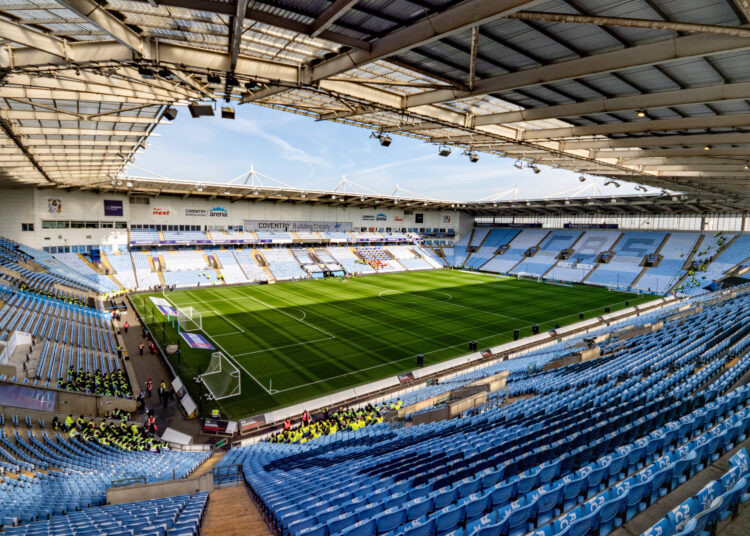
Coventry City vs Crystal Palace at the Coventry Building Society Arena on Saturday will be an early relegation six-pointer between two teams eager to get away from the relegation zone, one of whom will have a new manager in the dugout.
Coventry’s latest match ended in a 3-1 defeat to Everton before the international break, with several penalty appeals rejected in controversial circumstances. That result leaves this meeting as an early relegation battle, but not one in which either club is forced into an all-or-nothing chase. Coventry need to turn home advantage and their direct attacking approach into distance from the bottom three, while Crystal Palace begin Thomas Frank’s tenure looking for a response without making the draw irrelevant. The central question is whether Coventry can make Palace defend their first ball and second ball for long enough to expose the visitors’ unsettled defensive structure.
For Coventry, a victory would lift them from 17th into the P11–P13 range, but every result still leaves them in the relegation band. That makes the opportunity important without making a defeat terminal. Their latest outing showed both sides of the current run: they scored once and created enough to feel aggrieved by the penalty decisions, yet still conceded three. Across the recent five-match window, Coventry have scored nine and conceded nine. They carry a settled approach into this fixture, with the same broad structure used throughout that spell, and the main selection concern is defensive rather than tactical: Bobby Thomas and Caleb Yirenkyi are doubts, which could affect the depth available behind the midfield screen.
Palace have even more immediate pressure because they start at the foot of the table on seven points, but a draw remains a live outcome and a loss would leave them in 20th rather than ending the season’s contest. Their recent five-match run has brought only four goals and ten conceded, part of a wider defensive problem that saw them allow 24 goals in their opening ten matches. Frank’s arrival changes the mood and offers a new route through set pieces, yet the new manager must first make a side with recent defensive exposure function as a unit. Ismaïla Sarr’s absence removes a wide attacking option, while Jean-Philippe Mateta’s suspension means Palace need a different central reference from the one their previous structure was built around.
Coventry are expected to retain a 4-2-3-1, the shape that has carried their recent selection pattern. Carl Rushworth holds the goalkeeping place after starting all ten of his appearances, while Ethan Pinnock should anchor the left side of the defence. Stephen Mfuni is likely to fill the other centre-back position because Thomas is doubtful; Mfuni has three starts and 307 minutes this season, and his recent form gives Coventry a reason to trust the change rather than reshuffle the entire back line. Jay Dasilva remains the left-back outlet despite a difficult individual run, with ten starts, one goal, one assist and eight key passes.
Matt Grimes is expected to start alongside Victor Torp in the double pivot, though both calls carry more uncertainty than the established attacking positions. Grimes has made eight starts and played 728 minutes, while Torp has only two starts but has supplied one assist and six key passes in his 229 minutes. The pair’s job will be to protect the centre-backs while allowing Coventry to send the ball forward early. Jack Rudoni should operate behind Taiwo Awoniyi; Rudoni has three goals and 17 key passes from ten appearances, and his central position gives the direct game a link rather than leaving Awoniyi isolated. Yann Gboho’s two starts have produced one goal and three shots on target from five attempts, so he is the clearest form-based threat on the left. Tatsuhiro Sakamoto completes the attacking line on the right, with four starts and one goal.
Haji Wright, Aurèle Amenda and Josh Eccles are out for Coventry, while Frank Onyeka is listed as returning. Thomas and Yirenkyi remain doubts after knocks on international duty. The absences matter most in defensive cover: Mfuni is the likely beneficiary at centre-back, while any late change among the doubtful players could reduce the options available to protect the double pivot. Awoniyi is expected to lead the line, having started five of his eight appearances and registered three shots on target from eleven attempts.
Palace should use the 3-4-2-1 that has been their leading recent formation. Dean Henderson is the expected goalkeeper, with Chris Richards and Jaydee Canvot retaining the outside centre-back positions around Axel Disasi. Disasi has started five of six appearances, while Canvot has started all eight of his and played 729 minutes. Their continuity is important because Coventry will test the back three with early service rather than patiently circulate around it.
Tyrick Mitchell should provide the left-sided width after ten starts, two goals and nine key passes. Anan Khalaili is likely to play on the other side, having contributed one goal and five key passes from seven starts. Quinten Timber and Adam Wharton form the central pairing; Wharton has started all ten of his appearances and created four big chances, while Timber has started six matches and supplied one assist. Daichi Kamada should play behind Eddie Nketiah, with Kamada’s three assists and ten key passes showing why Palace continue to rely on his movement even during a colder spell. Yéremy Pino supplies the other attacking-midfield role and brings one goal, 14 key passes and three big chances created from ten appearances.
Sarr is out with a groin injury, Chadi Riad remains unavailable after a cruciate ligament tear, Takehiro Tomiyasu misses the trip and Mateta is suspended. Nketiah therefore becomes the central forward expected to make Palace’s revised attack work; he has six shots on target from ten attempts this season. The three-man structure preserves central cover, but the missing attacking options mean Palace will ask more of the two players behind him.
Coventry’s 4-2-3-1 is designed to keep two midfield screens behind Rudoni while opening wide routes for Dasilva and Milan van Ewijk. The measured profile supports that reading: Coventry play 62.5 long balls per match against a league typical figure of 49.75. Palace, by contrast, sit closer to the league’s normal directness, with 48 per match against the same 49.75 typical figure. That is the clearest stylistic difference in the game. Coventry will try to make the first contact happen quickly; Palace must decide whether to defend the initial ball or step out and contest the second one.
Coventry also hold much less of the ball in their measured profile, with 35.5 per match compared with Palace’s 47 and a league typical figure of 48.5. That does not mean the visitors will dominate every phase, because Palace’s selected posture is to pursue a win while keeping the draw live. Frank’s side should be willing to possess more, but their priority will be to preserve the three-man platform and use the wing-backs and two attacking midfielders without exposing the centre. Coventry can press for the result, but their shape is built to do so without abandoning the cover behind Rudoni.
The direct route is not simply a defensive retreat for Coventry. In their defeat to Everton, they produced 15 shots and 1.47 expected goals, showing that the approach can create sustained attacking pressure even without long periods of possession. Palace’s recent five-match run has produced 1.28 expected goals for per match against 1.89 expected goals against, while Coventry’s corresponding figures are 1.11 and 1.56. Neither side arrives with a dependable defensive platform, so the first goal should have a strong effect on the match’s shape. Palace’s new manager may want flexibility, but changing too early could remove the cover that allows them to stay in the game.
The main duel is Milan van Ewijk against Tyrick Mitchell in the mirrored wide lane. Van Ewijk has nine starts, ten key passes and a role that gives Coventry their right-sided outlet. Mitchell has started every match and has two goals, so he is not merely a defender waiting for the attack to reach him. If van Ewijk wins the lane, Palace’s wing-back can be pinned near his own back three, making it harder for the visitors to release their wide structure cleanly. If Mitchell controls it, Coventry lose the outlet that makes their controlled pursuit possible and may need to add a third centre-back later to protect a lead.
That contest is connected to the central battle between Taiwo Awoniyi and Axel Disasi. Awoniyi has to give Coventry a reliable target for the early service, while Disasi’s recent form makes him the defender most likely to challenge the first contact and keep Palace’s back three connected. Should Disasi win that exchange, Palace can keep their structure and defend the second ball with three centre-backs supported by the midfield. Should Awoniyi turn those deliveries into sustained pressure, Palace may need to move to a four-man shape and add another central midfielder, leaving Coventry with more room to continue the attack.
The second-ball pattern is the system-level issue behind both duels. Coventry’s direct service asks Palace to defend repeated phases rather than one isolated cross, while Palace’s wing-backs must still advance enough to give Nketiah support. The home side’s route is therefore more reliable if van Ewijk can keep Mitchell occupied and Awoniyi can prevent Disasi from stepping out comfortably. Palace’s route is to survive those contacts, draw Coventry’s full-backs forward and use Pino and Kamada in the spaces that appear behind them.
The lean is toward a Coventry win, held with medium confidence rather than strong certainty. Their home opportunity is better supported because the direct route has a clear target in Awoniyi and a settled framework behind him, while Palace are rebuilding the front of their attack around Nketiah. Coventry’s season expected-goals balance is 0.275, compared with Palace’s -2.837, giving the hosts the cleaner underlying attacking and defensive backdrop. Palace have also conceded 1.89 expected goals per match in the recent aggregate and have not kept a clean sheet in that span, which makes a sustained Coventry spell especially dangerous.
The strongest case against the home win is Palace’s ability to make the game about Coventry’s defensive decisions rather than their own first contact. If Mitchell gets beyond van Ewijk, Palace can stretch the home shape and bring Pino and Kamada into the spaces around the double pivot. A goal from that route would force Coventry to attack a more settled three-man defence while also worrying about the quality of their own cover. Frank’s managerial lift and Palace’s set-piece emphasis give the visitors a credible way to score even if Coventry control the long-ball contest.
The match settles in the 2-1, 2-0 or 1-1 range. The draw remains a serious part of the forecast because both managers have reason to avoid turning the game into an open exchange before the structure is tested.
The late tactical lever belongs to Coventry if they take the lead. Lampard can move from the 4-2-3-1 into a 3-4-2-1 by adding a centre-back, turning the wide outlets into wing-backs and protecting the central area without abandoning a route forward. Palace’s corresponding change is more reactive: switching to 4-2-3-1 would add midfield cover but remove the third centre-back that currently protects them against Awoniyi’s first contact. That difference may decide the final phase if the opening hour leaves one side protecting a narrow advantage.
