
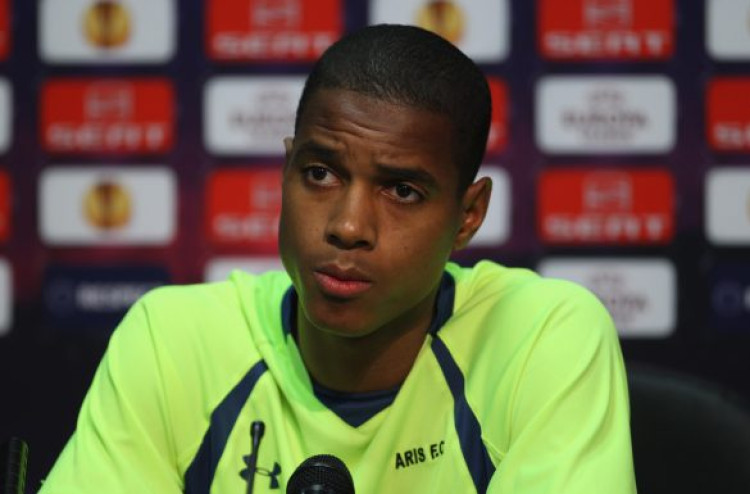
With just four months left before the 2026 FIFA World Cup, anticipation is building. There will be quite a few intriguing group stage matches, including France vs. Senegal, and one man who will have divided loyalties going into that match is none other than Ricardo William Faty.
Born in Villeneuve-Saint-Georges, France, to a Senegalese-Vietnamese father and a Cape Verdean mother, Faty grew up in the Parisian suburbs. After polishing his skills at Clairefontaine (1999 to 2002), Faty headed north to RC Strasbourg Alsace, where he eventually broke into the first team in 2005/06. Despite not even having signed a professional contract and despite not being able to save Strasbourg from relegation, Faty was able to impress across his 15 appearances – one of which came in a UEFA Cup match against Roma – prompting Roma manager Luciano Spalletti to sign him for €350,000.
Replacing French midfielder Olivier Dacourt following his move to Inter, Faty helped Roma win their first trophy in six years with the 2006/07 Coppa Italia. And after man-marking Rivaldo on his Champions League debut, Faty showcased his promising skills against the likes of Lyon, Manchester United, and Milan. Ultimately, however, he was unable to dislodge Daniele De Rossi, Simone Perotta, and David Pizarro from the starting line-up, prompting him to try his luck with Bundesliga outfit Bayer Leverkusen on a two-year loan.
But with regular minutes unbecoming, Faty decided to abort his Leverkusen loan after just a handful of months and return to France, where he guided Nantes to promotion. However, after suffering relegation to Ligue 2 the following season, Faty would return to Roma in the summer of 2009. He then departed Roma and made the move to Greek outfit Aris Salonica, before heading back to France and joining AC Ajaccio in 2012. That same year would see Faty switch international allegiances: having played eight times for France’s U21s from 2006 to 2007, Faty would switch over to Senegal and register five caps for the Lions of Teranga in 2012.
Having established himself as a key figure in midfield in Corsica, Faty then made the move to Belgium following Ajaccio’s relegation. After spending the 2014/15 season at Standard Liége, he spent the next few years in Türkiye with Bursaspor and MKE Ankaragücü, followed by a brief spell at Italian side Reggina. And after a swan song with C’Chartres Football in the French fourth tier, Faty retired at the end of the 2022/23 season. Now 39, Faty balances his time between raising his three daughters in Paris, working as a pundit for major French television outlets, and coaching the next top boys and girls from the Île-de-France region at INF Clairefontaine. Get French Football News spoke to Faty about his time playing in his native France.
What was it like starting your professional career at Strasbourg? Would you say that was the perfect bridge between youth and senior football?
Strasbourg was definitely the perfect place for me, because at that time, the current president, Marc Keller, had just retired. He came in as the CEO and wanted to build a strong academy and bet on young prospects, so I was one of the first players alongside Kevin Gameiro, whom Keller believed in a lot. It was a really nice place to train, to progress, to improve, and everything, and I got the opportunity to grow up in a nice environment to become a professional. For me, it was a good choice, and I’m very grateful for that.
After plying your trade in Italy and Germany, how did it feel to return to France and experience both promotion and relegation with Nantes?
It was the point to move back and get back to the big stage. Ligue 2 was easier for me, and we managed to achieve promotion, but the following season in Ligue 1 was catastrophic… it was very hard. Waldemar Kita is a president that I respect and like, honestly, but he was new in football, and his management was terrible… it wasn’t nice. He brought some new players who were already there in the second division, so it was like a mess. We had 38 players in training, so it was very difficult to manage everything. In the end, we went down to the second division, which is a bit of regret for me because I didn’t have a great season, just like everyone else. I was young, but I wasn’t so good, and if I had delivered a good season in that period, maybe my career would have been way, way different, because I was considered one of the huge prospects in France. I had a lot of expectations, but I didn’t deliver at that time. Unfortunately, maybe my career didn’t go the way I expected.
What would you say was the toughest moment in your playing career? What was the hardest moment where you had to be resilient and evolve from?
I can say two moments: the first was when I was at Nantes. It was a frustrating situation, because I was one of the players who was playing the most minutes, but we couldn’t win. I couldn’t give my best, and at that time, I did not know why. I was just 22 years old, and it was so frustrating because I couldn’t do more, you know? We lost all the games, we were struggling, and the supporters were against us because they were already against the president [Kita], and I felt powerless. I have some regrets, because for me, this season was a kind of turning point. I wasn’t playing for the France U-21s anymore, whereas all of my friends ended up playing for the national team like Yohan Cabaye, Blaise Matuidi, Jérémy Ménez, Samir Nasri… my entire generation. It was that time when they were starting to play and explode, and I wasn’t in that group of players, which was very frustrating.
The second one was when I was in Greece, and I didn’t get paid during the second season at Aris, which was very, very difficult. Sometimes you feel desperate when you’re just playing, and the people don’t just care about you, and when we won the game, the day after, we just went to the offices to ask them for some money. Some players were crying because they didn’t get paid… the local Greek players were in a very critical situation because they couldn’t even afford food, gas, or things like that. It was a very tough situation.
